
Urban Hydrosystems Management in Europe – EUCOR Excellence Chair “Water and Sustainability” (UNISTRA–KIT Collaboration)
- Ansprechperson:
Current and projected trends in climate change have placed Mediterranean climate regions (MCRs) under increasing scrutiny. These regions—including the Mediterranean Basin, the west coast of North America and northern Mexico, central Chile, southern and southwestern Australia, and the Western Cape region of South Africa—are experiencing more frequent and severe droughts, longer and more intense heatwaves, and heightened flood risks (King et al., 2024; MedECC, 2020).
In response to these challenges, shared to varying degrees across regions and socio-economic contexts, nature-based solutions (NbS) have gained increasing attention as strategies for both climate change mitigation and adaptation (Sarabi et al., 2019). Defined as actions inspired by, supported by, or mimicking natural processes, NbS are widely recognized as cost-effective approaches that simultaneously deliver multiple social, economic, and environmental co-benefits while enhancing long-term resilience (European Commission, 2015).
Considering the above, more comprehensive, comparative research on the effectiveness of NbS in addressing urban climate extremes across MCRs is needed, offering strong potential for cross-regional learning and transferability while accounting for context-specific differences.
This project is a collaboration within the framework of the EUCOR Excellence Chair “Water and Sustainability,” held by Prof. Dr. Karl Matthias Wantzen at University of Strasbourg, involving the Hydraulic Engineering and Water Resources Management (IWU-WB, Prof. Dr. Mário Franca) and Environmental Fluid Mechanics (IWU-EFM, Prof. Dr. Olivier Eiff) research groups of the Karlsruhe Institute of Technology.
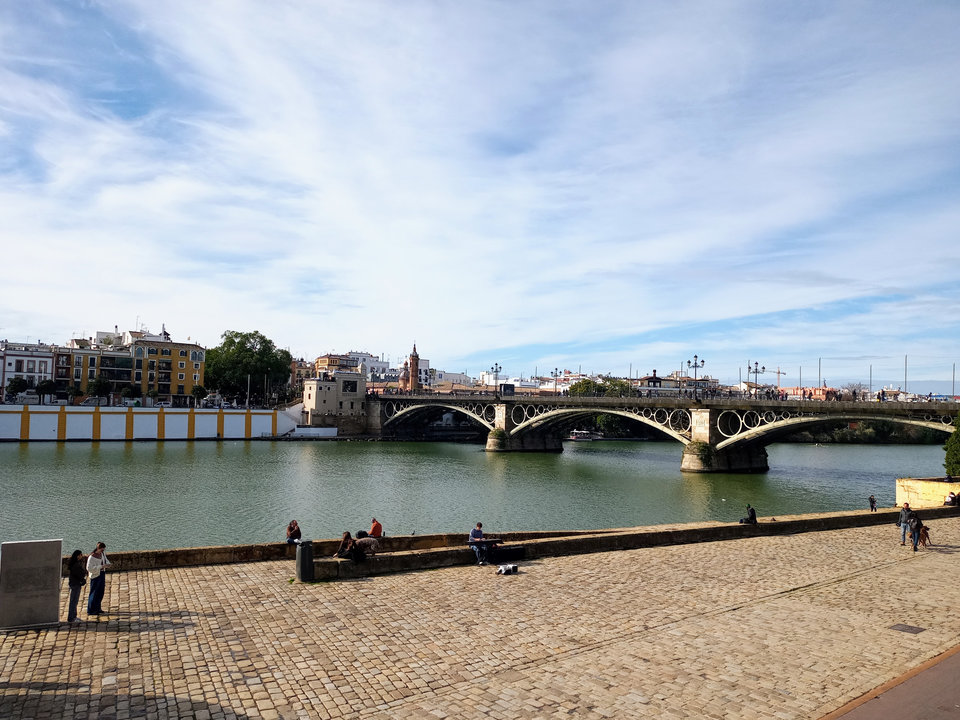
Seville, an example of a Mediterranean-climate city (Photo: Abby Ortega).